
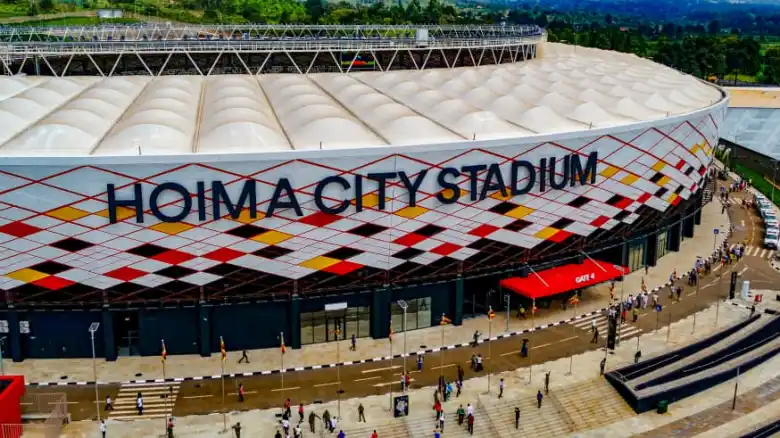
Uganda's AFCON 2027 Dream Takes Shape Inside the KSh 16 Billion Hoima City Stadium
Uganda’s new 20,000-seat arena prepares for its first international fixture—and a defining test on the road to AFCON 2027.
29 Sep 2026 · 6 min read · AITech News Desk
A landmark night for Hoima
Uganda is set to welcome Libya to Hoima City Stadium on Tuesday, 29 September 2026, for the first international fixture staged at the new venue. The Group H AFCON 2027 qualifier will carry significance beyond the result: it is the first full matchday test for a stadium built to serve Uganda’s role as a co-host alongside Kenya and Tanzania.
For Hoima, the occasion brings international football to a city now central to Uganda’s tournament plans. For organisers, it offers a live opportunity to assess spectator movement, security operations, pitch performance and matchday coordination well before the 2027 finals.
A major national investment
The Ugandan government financed the venue, constructed by Turkish contractor Summa, at a reported cost of about $129 million—approximately KSh 16.7 billion. Work began in September 2024, and the National Council of Sports commissioned the complex in December 2025 after a rapid construction programme.
At its centre is a 20,000-capacity football stadium with a hybrid natural-and-synthetic playing surface. Four team dressing rooms, 12 VIP and VVIP suites, a presidential suite and a 50-seat press room support major-match operations, while 839 parking spaces, eight lifts and dedicated facilities for people with disabilities form part of the spectator infrastructure.
More than a football ground
Hoima City Stadium anchors a wider multi-sport complex. Its facilities include a 2,000-seat indoor arena, a 25-by-12.5-metre swimming pool, basketball and volleyball courts, a fitness centre and training spaces for boxing, martial arts, badminton and table tennis.
The development also includes concession and retail units designed to support event-day activity. Together, these facilities position the complex as a year-round sporting destination rather than a venue used only for major football fixtures.
Smart systems under matchday pressure
A network of 279 security cameras, automated access controls, emergency call points and fire-alarm systems supports venue monitoring. A central building-management system controls lighting, air conditioning, backup power and automated pitch irrigation, while motion sensors manage lighting in busy corridors and public washrooms.
Following CAF inspections in February 2026, Uganda’s AFCON Local Organising Committee said roughly 95% of identified issues had been addressed. A dedicated pedestrian bridge linking VVIP parking to the VVIP lounge remained among the works still under construction at the time of that update.
A dress rehearsal for 2027
The Libya fixture gives teams, officials and supporters their first experience of the stadium under international-match conditions. Every arrival route, access gate and operational decision will provide lessons that can shape future events in Hoima.
Uganda’s AFCON dream is no longer represented only by plans and renderings. In Hoima, it now has a completed arena, a first major fixture and an opportunity to demonstrate how the country intends to welcome Africa in 2027.